 Vero Water Recovery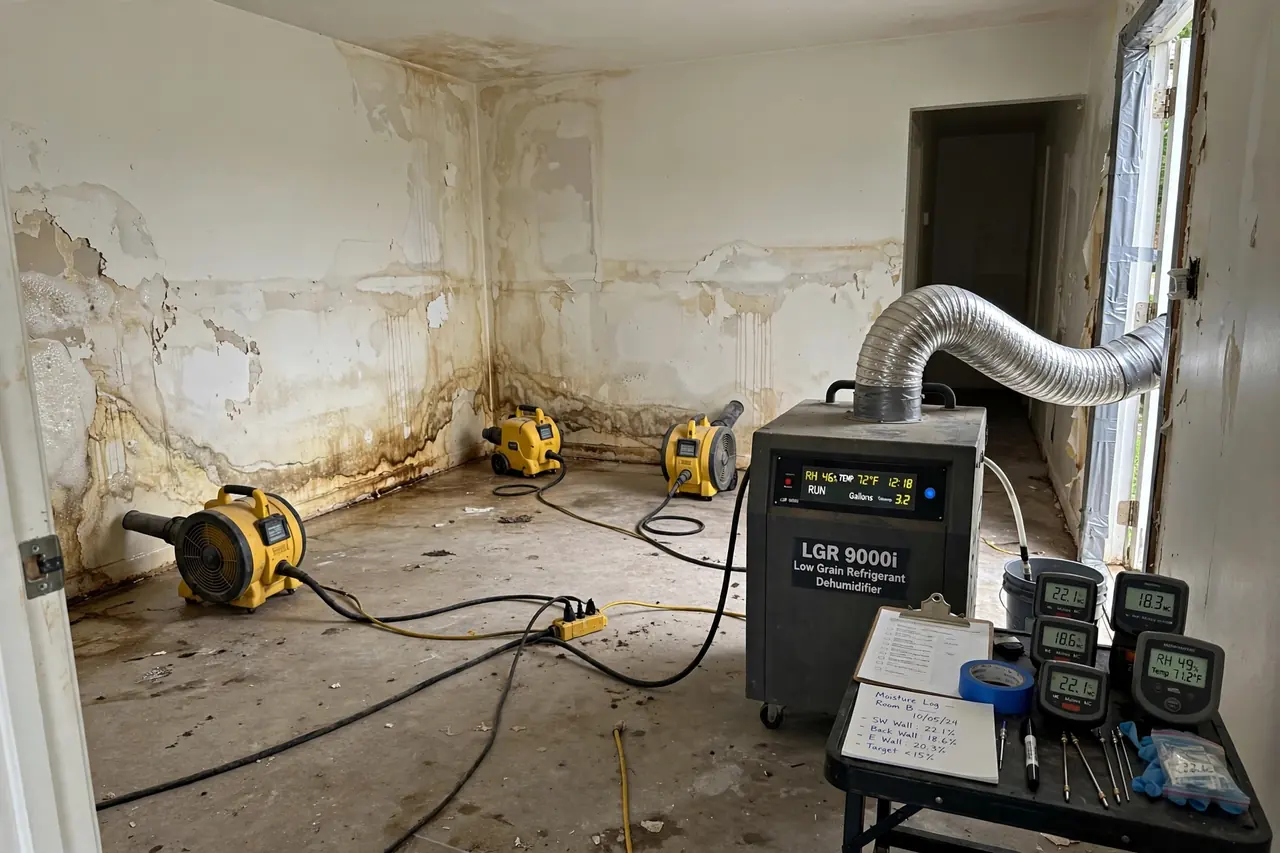
'How long will this take?' is the first question every property owner asks, and the honest answer has two parts. Standing-water extraction itself is fast, often completed in hours. But complete structural drying, the part that actually protects your property, takes days. Here's what each phase really involves.
Two Phases: Extraction Vs. Drying
| Phase | Typical duration | What happens |
|---|---|---|
| Water extraction | 1–8 hours | Standing water removed with truck-mount or portable extractors |
| Structural drying | 3–5 days (typical) | Air movers + dehumidification dry walls, floors, and framing; moisture monitored daily |
| Verification | Final day | Readings confirm dry standards; equipment removed |
Anyone promising a complete dry-out in a day is skipping the drying phase, which is where the lasting protection happens.
How Long Does Extraction Take?
Extraction time depends on water volume and access:
- Single room, shallow water: 1–2 hours with professional equipment.
- Multiple rooms: 3–5 hours, including carpet and pad extraction.
- Whole floor or inches of standing water: 4–8 hours, possibly with pumps for depth.
- Crawl space or basement: highly variable, pumping plus access challenges.
Professional extractors remove water roughly 50 times faster than consumer wet-vacs, which is why calling professionals shortens every timeline that follows.
How Long Does Structural Drying Take?
Most residential dry-outs run 3–5 days of continuous equipment operation. But several factors move that number:
What speeds drying:
- Fast extraction (less water left to evaporate)
- Warm temperatures (each 10°F roughly doubles evaporation rate)
- Low indoor humidity (dehumidifiers working effectively)
- Porous, exposed materials with good airflow access
What slows drying:
- Dense materials, hardwood, concrete, plaster dry slowly
- Florida's ambient humidity fighting the dehumidifiers
- Water trapped in wall cavities or under flooring
- Delayed start, every day of waiting adds days of drying
- Contamination requiring material removal first
Drying Times By Material
| Material | Typical drying time | Notes |
|---|---|---|
| Carpet & pad | 2–4 days | Pad may need replacement if long-soaked |
| Drywall | 3–5 days | Severely saturated drywall is removed, not dried |
| Hardwood flooring | 5–10+ days | Cupping often flattens as drying progresses |
| Concrete slab | 5–14 days | Releases moisture very slowly; must meet flooring specs |
| Cabinets (particle board) | Often not salvageable | Swells irreversibly; solid wood fares better |
How Do You Know Drying Is Finished?
Not by time, by measurement. Professionals take daily moisture readings and compare them against dry standards for each material. Equipment comes out when readings confirm dryness, documented in a drying log.
Stay clear of electrical hazards and contaminated water. Call +1 (380) 237-1358, we respond 24/7.