 Vero Water Recovery
Water damage is not always limited to the area where you first notice it. A leaking pipe can soak the flooring beneath a cabinet, water can move behind drywall, and a roof leak can leave insulation damp even when the ceiling looks dry. If that moisture is not dealt with, it can cause further damage and create conditions for mold growth.
Water damage restoration is the process of removing water, drying affected building materials, cleaning damaged areas, and repairing parts of a property that cannot be salvaged. The work depends on where the water came from, how far it has spread, and which materials have been affected.
- What Does Water Damage Restoration Include?
- What Should You Do After Discovering Water Damage?
- How Does the Water Damage Restoration Process Work?
- What Is the Difference Between Water Damage Mitigation and Restoration?
- What Causes Water Damage in a Property?
- How Much Does Water Damage Restoration Cost?
- Does Homeowners Insurance Cover Water Damage Restoration?
- When Should You Hire a Water Damage Restoration Company?
What Does Water Damage Restoration Include?
A water damage restoration project can involve several types of work:
- Water extraction: Removing standing water from floors, carpets, and other affected areas.
- Moisture inspection: Finding damp materials and checking places where water may have spread.
- Structural drying: Using air movers and dehumidifiers to remove moisture from building materials and the surrounding air.
- Cleaning and material removal: Cleaning surfaces that can be saved and removing materials that cannot be properly dried or restored.
- Repairs: Replacing damaged drywall, insulation, flooring, trim, or other building components when necessary.
Not every property needs all of these steps. A small plumbing leak may require limited extraction and drying. Water that has spread beneath flooring or into several rooms can take considerably more work.
What Should You Do After Discovering Water Damage?
Before starting cleanup, take a moment to check the situation. Some water damage can involve electrical hazards, contaminated water, or weakened building materials.
- Check for safety hazards. Stay out of standing water if electrical outlets, wiring, or appliances may be affected. Do not enter areas where the structure may be unsafe.
- Stop the water source if it is safe. If a plumbing leak is responsible, turn off the relevant water supply if you can reach the valve safely.
- Document the damage. Take photographs of affected rooms and belongings before cleanup, provided it is safe to do so.
- Move unaffected belongings. Protect furniture and other items by moving them away from the affected area if you can do so safely.
- Arrange an assessment. Get professional help if water has entered walls, spread beneath flooring, affected several rooms, or come from flooding or sewage.
Avoid using fans or handling potentially contaminated materials until the water source and safety risks have been assessed.
How Does the Water Damage Restoration Process Work?
The exact process varies from one property to another, but most restoration work follows these stages.
1. Inspection and moisture assessment
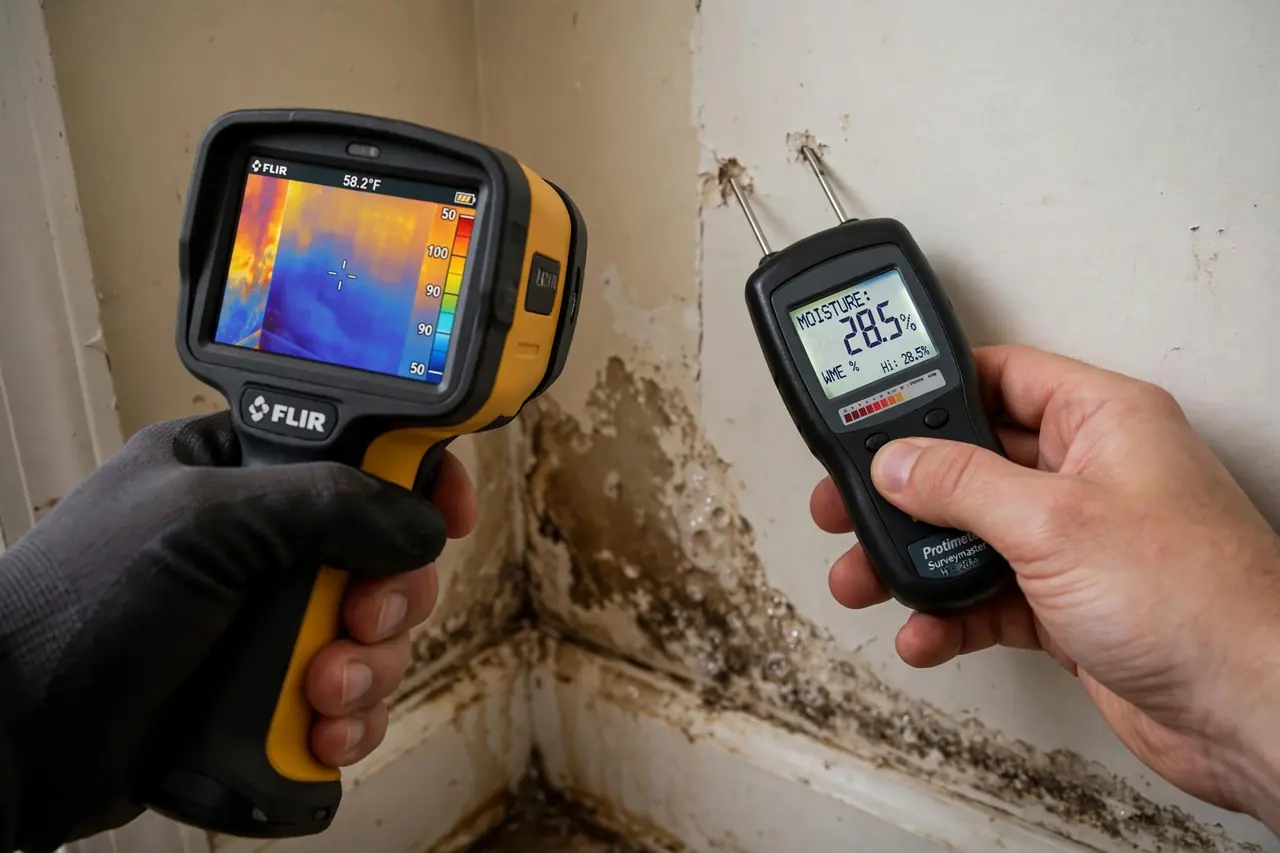
The first step is to identify the water source and find out which parts of the property have been affected. This includes checking floors, walls, ceilings, and other materials that may have absorbed water.
Moisture meters can help locate damp areas inside drywall, wood, and flooring, even when the surface looks dry. The findings help determine what can be dried, what may need to be removed, and whether further inspection is necessary.
2. Water extraction
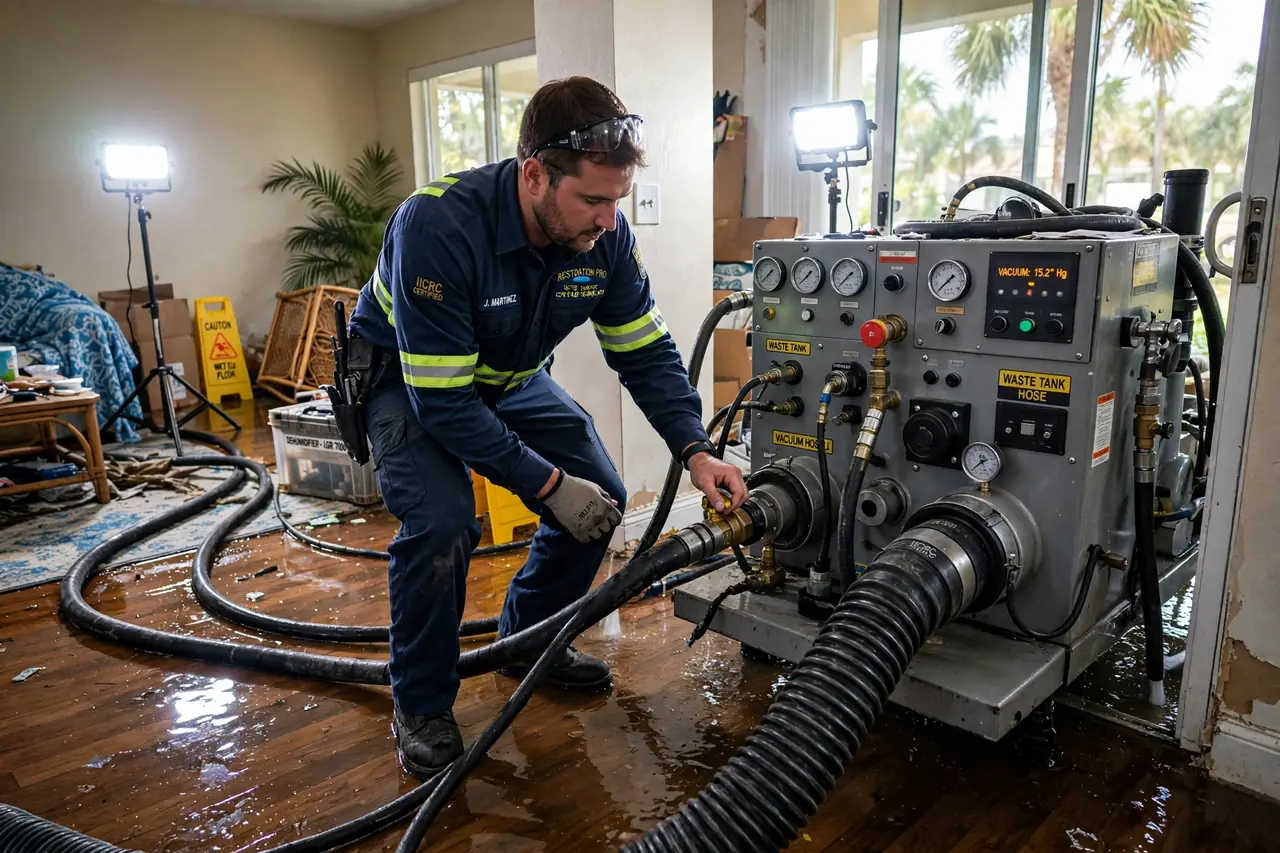
Standing water is removed using suitable pumps and extraction equipment. The sooner excess water is removed, the less time it has to spread into nearby materials.
Depending on the property, this may include residential water extraction from carpets, hard flooring, or other affected areas.
3. Structural drying and dehumidification
Removing visible water is only part of the job. Moisture can remain in flooring, drywall, wood, and other building materials.
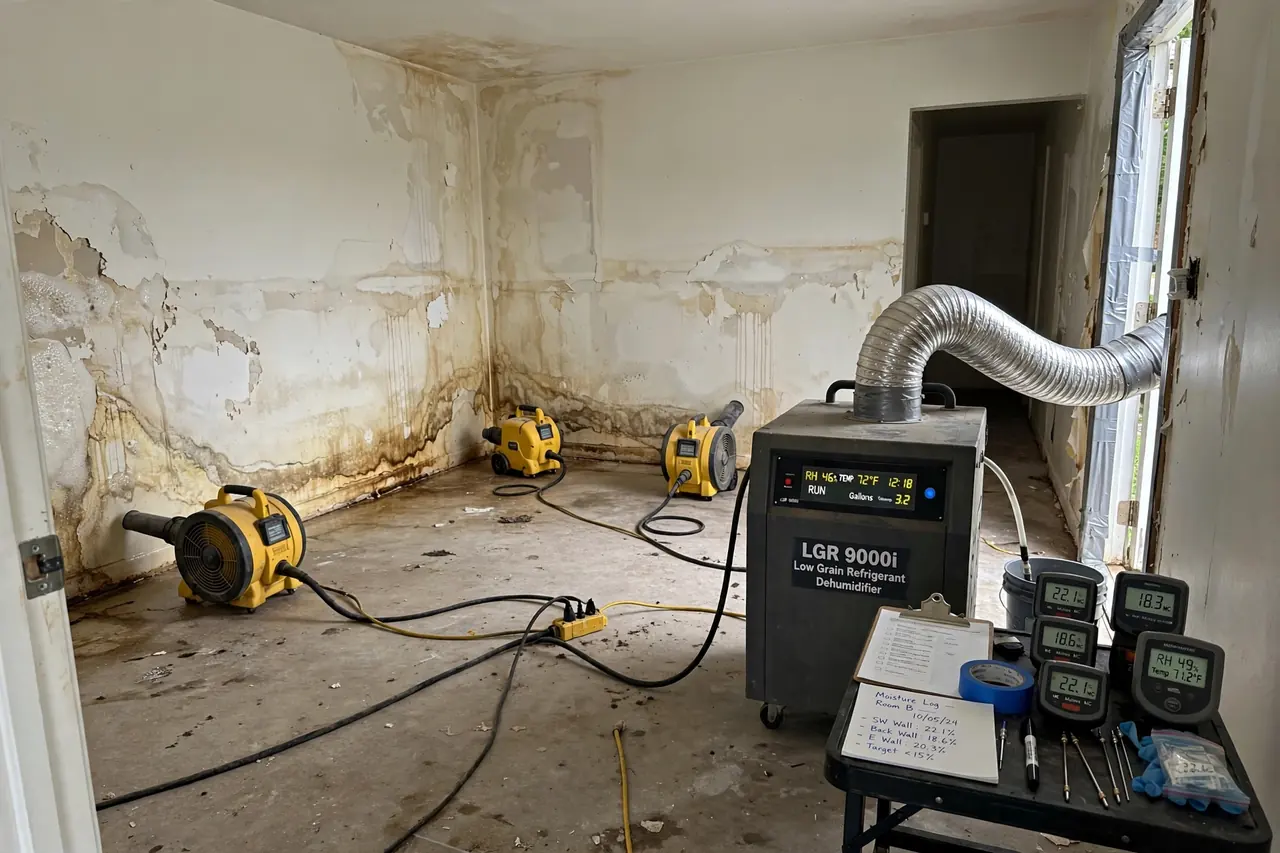
Air movers help circulate air across wet surfaces, while dehumidifiers remove moisture from the surrounding air. This supports the drying of affected materials and helps prevent moisture from remaining trapped inside the structure. You can learn more about our structural drying services.
A surface feeling dry does not necessarily mean the material underneath is dry. Technicians can take moisture readings over time and compare affected materials with suitable dry reference areas. Drying is considered complete when readings show that the affected materials have reached appropriate moisture levels, not simply when equipment has been running for a set number of hours.
4. Cleaning and removal of damaged materials
Once the affected areas have been assessed, materials are checked to see whether they can be cleaned and dried or need to be removed.
For example, drywall may sometimes be dried in place if it remains structurally sound and can be dried properly. Swollen, deteriorated, or contaminated materials may need to be taken out.
The source of the water matters here. Floodwater and sewage can contain harmful contaminants, so they require appropriate protective measures and cleanup procedures.
5. Repairs and restoration
After the affected areas have been dried and cleaned, repair work can begin. Depending on the extent of the damage, this may involve replacing drywall, insulation, flooring, trim, or other building components.
The aim is to return the affected areas to a safe, usable condition.
What Is the Difference Between Water Damage Mitigation and Restoration?
Water damage mitigation focuses on limiting further damage after a leak, overflow, or flood. Restoration covers the work needed to recover the affected property, including drying, cleaning, material removal, and repairs.
| Comparison | Water Damage Mitigation | Water Damage Restoration |
|---|---|---|
| Main purpose | Limit further damage | Recover the affected property |
| Typical work | Water extraction, initial drying, and protecting affected areas | Drying, cleaning, material removal, and repairs |
| Main focus | Stabilizing the situation | Completing the recovery work |
| Expected outcome | Further damage is controlled as much as possible | Affected areas are returned to a safe, usable condition |
Mitigation is part of the wider restoration process. Removing visible water does not mean the building materials are dry or that repairs can begin. Read more about water extraction vs. water mitigation.
What Causes Water Damage in a Property?
Water damage can start in several ways. Common causes include:
- Burst or leaking plumbing pipes
- Washing machine and dishwasher leaks
- Water heater failures
- Roof leaks and wind-driven rain
- Overflowing sinks, bathtubs, or toilets
- Stormwater and flooding
- Sewage backups
In Vero Beach, heavy rain and storms can contribute to water intrusion, while roof leaks, plumbing problems, and appliance failures can affect properties at any time. Humid conditions also make proper drying important because moisture can remain inside building materials after visible water has been removed.
For properties affected by flooding, flood water extraction may be needed before structural drying and repairs can move forward.
How Much Does Water Damage Restoration Cost?
There is no single price for water damage restoration. The cost depends on how much water entered the property, the size of the affected area, the materials involved, and the work needed to restore them.
An estimate may include three main parts:
- Water removal and drying: Extraction, drying equipment, dehumidification, and moisture monitoring.
- Cleanup and disposal: Cleaning affected areas and removing materials that cannot be safely or properly restored.
- Repairs and reconstruction: Replacing damaged drywall, insulation, flooring, trim, or other building components.
For example, water affecting a small section of hard flooring may require less work than water that has soaked carpet padding and the subfloor beneath it. Hidden moisture, contaminated water, and damage across multiple rooms can increase the amount of work involved.
An inspection helps establish the actual scope. A price based only on visible water may miss moisture beneath floors or inside walls.
Does Homeowners Insurance Cover Water Damage Restoration?
It depends on what caused the damage and what your policy covers.
Some homeowners insurance policies cover qualifying sudden and accidental water damage, such as certain plumbing failures. Gradual leaks and damage linked to neglected maintenance may be excluded. Standard homeowners insurance generally does not cover flooding from outside the property. Separate flood insurance may be needed. Sewer or drain backup coverage also depends on the policy.
If you plan to make a claim:
- Photograph the damage when it is safe.
- Keep records of cleanup expenses and related communication.
- Contact your insurer promptly.
- Ask what documentation is needed before disposing of damaged belongings or materials, where practical.
Read your policy carefully and confirm coverage with your insurer. Do not assume every type of water damage is covered.
When Should You Hire a Water Damage Restoration Company?
A professional assessment is worth considering when:
- Water has entered walls, ceilings, or flooring.
- Carpet, padding, or insulation has become saturated.
- Water has affected multiple rooms.
- The water came from flooding or sewage.
- A musty smell or recurring dampness remains after cleanup.
- You cannot tell how far the water has spread.
A small spill on a hard surface may be manageable if the source has been stopped and the area can be dried safely. Larger losses, hidden moisture, and potentially contaminated water need more careful handling.
Frequently Asked Questions
How long does water damage restoration take?
It depends on the amount of water, the materials affected, and the drying conditions. Water extraction may be completed relatively quickly, but structural drying and repairs can take longer. The affected materials need to reach appropriate moisture levels before rebuilding can begin.
How quickly should water-damaged materials be dried?
The EPA recommends drying wet or damp materials within 24 to 48 hours where possible to help reduce mold growth. This is a prevention guideline, not a guarantee that mold will or will not develop. Water from flooding or sewage also requires additional precautions.
Does all water-damaged drywall need to be replaced?
No. Drywall may be salvageable if it remains structurally sound and can be dried properly. Swelling, deterioration, contamination, or moisture that cannot be adequately removed may make replacement necessary.
Can water damage remain hidden after the surface dries?
Yes. Water can remain beneath flooring, behind baseboards, or inside wall cavities. Moisture measurements can help identify damp materials that cannot be judged by touch or appearance alone.
Call +1 (772) 710-1561 to discuss the affected area and the restoration work your property may need. 24/7 water-damage help is available.
Need Water Damage Restoration in Vero Beach?
Water can spread beneath flooring and inside walls before the full extent of the damage becomes visible. If your property has experienced a leak, overflow, or flooding, an assessment can help establish what needs to be dried, cleaned, or repaired.
Contact Vero Water Recovery to discuss the affected area and the restoration work your property may need.
Related Water Damage Guides
More practical guidance for understanding water damage and the restoration process.
Water Extraction vs. Water Mitigation
Understand how immediate water removal fits into the wider mitigation process.
Read guide →Signs of Hidden Water Damage
Learn where moisture can remain after visible water has disappeared.
Read guide →How Long Does Water Extraction Take?
Explore what affects extraction and structural drying timelines.
Read guide →Dealing With Water Damage?
Talk through the water source, affected areas, and whether extraction or drying may be needed.